AI is now part of everyday work.
People use it to write emails, complete assignments, plan projects, create content, and even make career decisions. If you are new to AI, it can feel exciting. It feels powerful. It feels efficient.
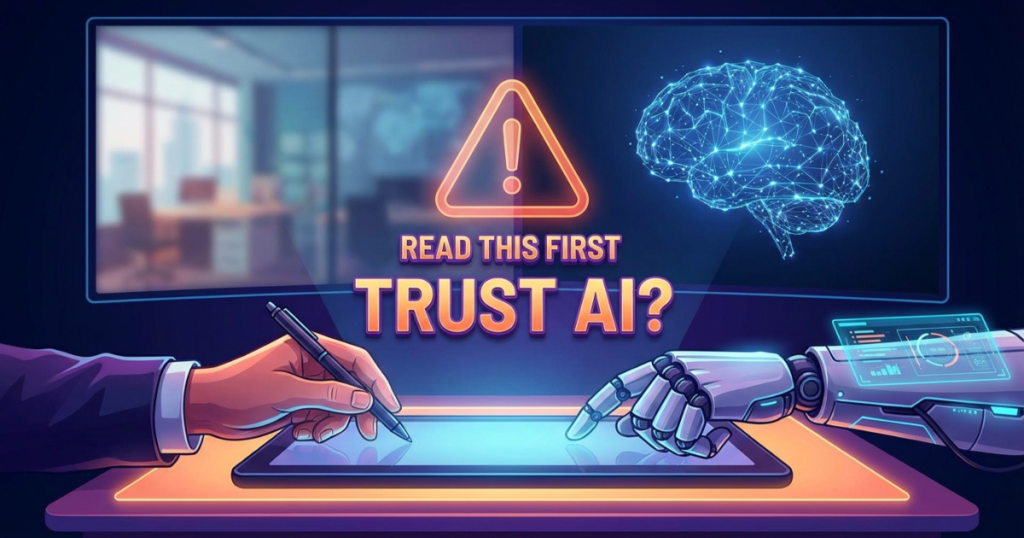
But it can also feel slightly uncomfortable.
A small voice inside may ask,
“Is it really safe to trust this with important work?”
That question is smart. And you should not ignore it.
This article is not here to scare you away from AI. It is here to help you use it without losing control of your thinking, skills, or confidence.
Why Beginners Trust AI Too Quickly
AI feels impressive at first.
It answers in seconds.
It writes clearly.
It sounds confident.
And confidence creates trust.
When something responds instantly and uses professional language, your brain assumes it must be intelligent. But fast and confident are not the same as accurate and thoughtful.
AI does not hesitate. It does not show doubt. Even when it is partially wrong, the tone stays calm and certain. Beginners often mistake this tone for deep understanding.
There is another factor: social pressure.
When classmates use AI for assignments, colleagues use it for reports, and creators talk about it online, it becomes normal. You start thinking, “If everyone trusts it, why shouldn’t I?”
But popularity does not equal reliability. Many people using AI are also beginners. They are learning. They are experimenting. And sometimes, they are making mistakes quietly.
Trust grows faster than understanding. That is the real issue.
What AI Is Actually Good At
To be fair, AI is genuinely useful.
It works best when you already understand the task and just need support. For example, AI can help you create a rough draft when you are stuck. It can improve grammar, suggest structure, summarize long content, or organize scattered ideas.
If you know what you want to say but struggle with wording, AI can help polish your message. If you have messy notes, it can turn them into clean points.
In these situations, AI saves time and mental energy. It acts like an assistant — not a replacement.
Used this way, AI feels empowering.
Where AI Quietly Fails
Problems start when people expect AI to understand context.
AI does not know your workplace culture. It does not understand your teacher’s expectations. It does not feel your client’s emotions. It cannot see long-term consequences.
It gives general answers. Real work is never general.
Here is a simple example.
An employee once used AI to write an email responding to a client complaint. The email looked perfect. Professional. Polished. Calm.
But it missed one small detail: the client’s frustration was personal, not technical. The AI-generated response sounded formal but cold. The relationship became worse.
The mistake was not obvious in the text. The tone simply did not fit the situation.
AI did not fail loudly. It failed quietly.
That is more dangerous.
The Risk of Confident Mistakes
AI sometimes mixes outdated and current information. It may assume facts that are not true. It may leave out critical details.
The biggest danger is not that AI makes mistakes.
The biggest danger is that it makes mistakes confidently.
When something sounds correct, beginners rarely question it. They copy. They paste. They submit.
And when something goes wrong, the responsibility does not belong to AI.
It belongs to you.
AI does not lose a job.
AI does not fail an exam.
AI does not damage relationships.
You do.
The Hidden Cost of Over-Reliance
The most serious loss from blind AI usage is not a wrong answer.
It is reduced thinking.
When people stop asking, “Does this make sense?” and start asking, “What should I paste?”, something changes. Skills weaken. Creativity slows. Confidence drops.
This does not happen in one day. It happens slowly.
Over time, you may start trusting AI more than yourself. That is dependency.
And dependency reduces growth.
How to Use AI Without Losing Control
There is a simple mindset that protects you:
AI assists. Humans decide.
Use AI to support your work, not to replace your thinking. Let it suggest ideas, draft content, or improve structure. But always review carefully.
Before using AI output, read it slowly. Ask yourself:
- Does this match my situation?
- Is this factually correct?
- Does this sound like me?
If you would not say it yourself, do not send it.
Instead of telling AI, “Write this for me,” try asking it to improve your existing idea while keeping your voice. This small shift keeps control with you.
When You Should Be Extremely Careful
Certain areas require extra caution.
Legal advice. Financial decisions. Medical guidance. Academic submissions. Sensitive communication.
In these situations, mistakes have long-term consequences. AI can provide information, but it should never be the final authority.
Human review is not optional here. It is necessary.
Why Human Judgment Will Always Matter
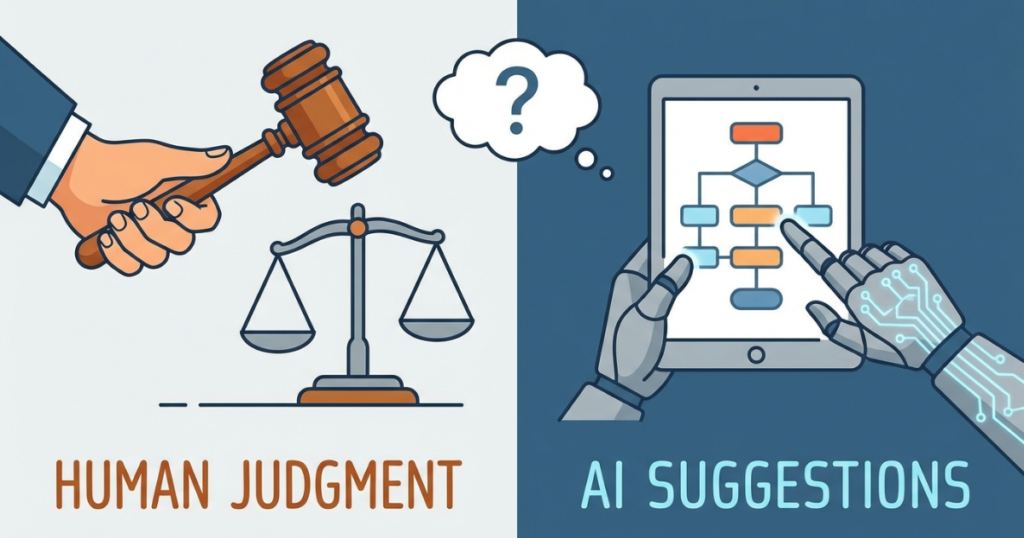
AI processes information. Humans understand meaning.
AI predicts patterns. Humans understand impact.
AI offers options. Humans choose what is right.
As AI tools become more common, many outputs will start to look similar. Answers will be everywhere. Speed will become normal.
What will stand out is thoughtful judgment.
The future will not reward people who use AI the most. It will reward people who know when to pause, question, and think.
A Calm Truth
You do not need to use AI for everything.
You do not need to compete with anyone.
Using AI wisely is better than using it everywhere. The goal is not speed. The goal is control.
Final Thoughts
AI is not the problem. Blind trust is. The people who will succeed in the AI era are not the ones who use AI all the time. They are the ones who know when to use it — and when to pause.
If this article made you stop for a moment before clicking “generate,” that is a good thing. That pause means you are thinking. And thinking is your real advantage.
We live in a world full of instant answers. But speed is not wisdom. Tools can respond quickly, but only humans can judge what truly makes sense.
In the end, AI can assist you. But your judgment, your values, and your decisions are what shape your future. And that is something no tool can replace.
Frequently Asked Questions (FAQ)
Is AI safe to use for beginners?
Yes, AI is safe for beginners if used carefully. The problem is not AI itself, but blind trust. Beginners should use AI as a helper, not as a decision-maker, and always review important output before using it.
Can I trust AI answers completely?
No. AI can give helpful answers, but it can also be wrong or incomplete. It does not understand your personal situation, emotions, or consequences. Always double-check important information and apply your own judgment.
Is it okay to use AI for work or studies?
Yes, but only for support. AI is good for drafts, ideas, grammar, and explanations. You should avoid using AI for final submissions, sensitive communication, or decisions that can affect your career or education without human review.
Will using AI make me dependent on it?
It can, if you rely on it too much. When people stop thinking and start copy-pasting, dependency grows. Using AI wisely means letting it support your thinking, not replace it
How can I use AI without making mistakes?
Always read AI output carefully, verify important details, adjust the tone, and ask yourself if it truly fits your situation. If you wouldn’t say it yourself, don’t use it.